Visitors & Follow-Up
How to Follow Up With First-Time Church Visitors
By Church By Faith Team · · 6 min read
Good visitor follow-up is a team process, not a pastor's to-do list. Here is how to set it up, who should do what, and how to keep anyone from slipping through.
A first-time visitor is quietly deciding whether to come back, and what happens after they leave on Sunday matters as much as what happened while they were there. The good news is that follow-up doesn't require a big staff. It requires a simple process, a few people who know their part, and one list everyone trusts.
This guide covers the process and the roles. It's meant to be printed out and talked through at your next leadership meeting.
Follow-up is a team job, not the pastor's to-do list
In many small churches, visitor follow-up quietly falls on the pastor. The pastor meets the family at the door, tries to remember their names, and means to call on Tuesday. Then Tuesday brings a funeral and a leaking roof, and the call never happens.
Spreading the work across a small team fixes this. It also gives visitors something important: the sense that a church noticed them, not just a busy leader. Paul's words fit well here: "Wherefore receive ye one another, as Christ also received us" (Romans 15:7, KJV).
A workable follow-up team for a small church can be as few as three or four people:
- Welcome lead. Owns the process, runs a short weekly check-in, and makes sure every guest has a next step.
- Greeters. Meet visitors on Sunday and gather the few details you need, gently.
- Pastor or elder. Makes personal contact when a guest asks for a leader or shares a need.
- Connector. Often a small group leader or ministry leader who invites the guest into something smaller than Sunday.
- Record keeper. Makes sure the details end up in one place the same day. This can be the welcome lead.
One person may wear more than one hat. What matters is that every job has a name next to it.
Before Sunday: decide what you'll collect and where it lives
Follow-up breaks down most often before the first visitor even arrives, because nobody agreed on the basics. Settle these questions once:
- What do we need to know? Keep it short: name, the best way to reach them, whether this is their first visit, how they heard about you, and whether they'd like someone to contact them. A prayer request is optional and should stay optional.
- Where does it go? Pick one list. Not a notebook, a group text and a spreadsheet, but one place.
- Who can see it? Visitor details, and especially prayer requests, should only be visible to the people doing follow-up.
- How do we record permission? Note which way the person is happy to be contacted, and respect it. Someone who gave an email but not a phone number hasn't invited a text.
- Which language? In a bilingual church, note whether the guest prefers English or Spanish so the right person reaches out.
On Sunday: capture the visit without making it awkward
Visitors can tell the difference between being welcomed and being processed. Train greeters to lead with conversation and ask for details only after a real connection.
A few practical habits:
- Greet first, ask second. Learn their name and something about them before mentioning any form or card.
- Offer, don't require. "Would you like us to send you some information about the church?" is better than handing over a clipboard.
- Ask how they'd like to be contacted. Some people welcome a call. Others only want an email.
- Listen for the real need. A guest who mentions a hospital stay, a new baby or a move needs a different next step than someone who is simply church shopping.
- Pass it on the same day. Greeters give what they learned to the record keeper before they go home, while the details are fresh.
The first week: who does what
The first few days matter most. Here's how the roles fit together in a typical week.
Sunday afternoon. The record keeper enters every visitor into the one list and flags anyone who asked for a leader or shared a need.
Monday or Tuesday. The welcome lead reviews the list and assigns each guest a person. Guests who asked for a leader go to the pastor or an elder. A guest with a prayer request goes to someone on the care team. Everyone else goes to a greeter or connector who met them, if possible.
By midweek. Each assigned person makes their personal contact in the way the guest said they prefer. They note the outcome on the list: reached, left a message, or no response yet.
Before next Sunday. The welcome lead checks that every guest was contacted, and tells greeters who might return so someone can recognize them by name.
The specific wording and timing of each message is its own topic. Here, the point is simply that every visitor has an owner and a deadline.
The first month: track it so nobody is forgotten
After the first week, follow-up shifts from "welcome" to "belonging." Keep it simple:
- Use a few clear statuses. For example: New, Contacted, Came back, Connected to a group, No response. Anyone should be able to glance at the list and know where each guest stands.
- Hold a 15-minute weekly huddle. The welcome lead, the pastor and one or two others go down the list together. It can easily become the most useful 15 minutes of your week.
- Aim for one next step. A second visit, a meal, a small group, a newcomers' lunch. One step, not five.
- Know when to stop. If someone doesn't respond after a few kind, low-pressure attempts, mark them as no response and let them be. Respecting their silence is part of respecting them.
- Celebrate movement. When a guest joins a group or asks about membership, update the list and thank the people who helped.
How Church By Faith handles visitor follow-up
Church By Faith supports this process with a few specific tools, and it's honest to say what it doesn't do as well.
What it does:
- Visitor or member. Every profile records whether the person is a visitor or a member, separate from what they're allowed to do. After they arrive, only staff with member-management permission can change it.
- "Your visit." A signed-in visitor can answer five short questions on their profile: first visit, how they heard about you, whether they'd like a church leader to contact them, a prayer request, and their interests.
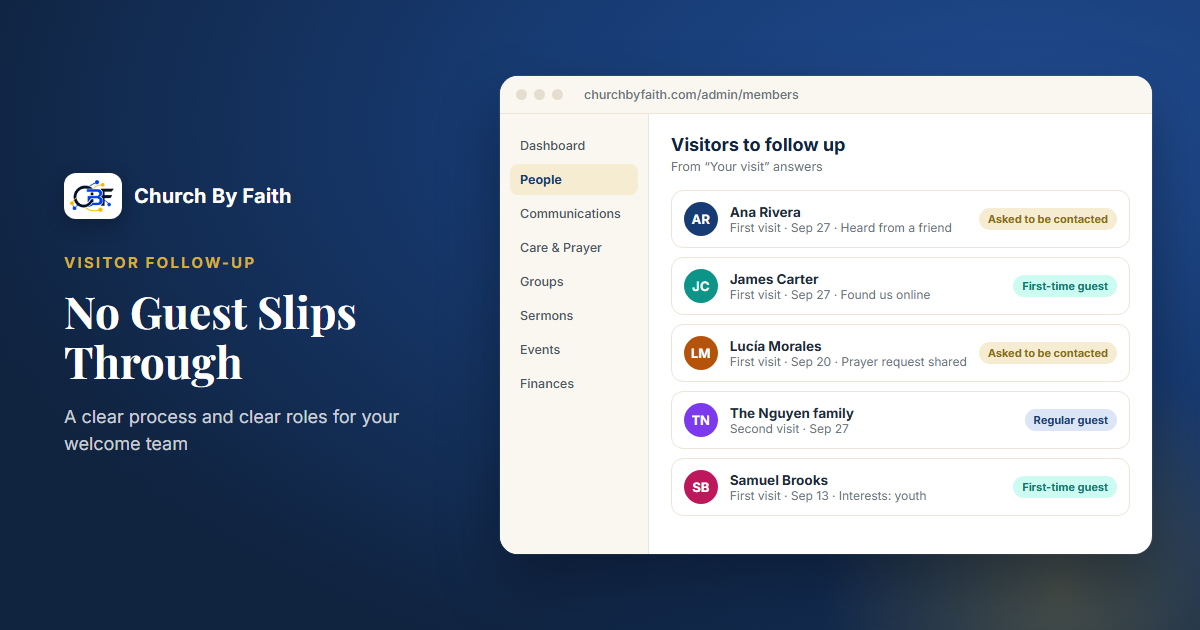
- "Visitors to follow up." On the Members admin page, staff see a list of visitors, with an "Asked to be contacted" badge and the first-visit date. Only people with the private pastoral permission can see it, so guest details stay with your care team.
- Relationship badges such as First-time guest and Regular guest, so you can see at a glance who is new.
- Roles that match your team, including Care Team Member and Group Leader, and an inbox where conversations in a New Visitors category can be assigned to a specific person.
What it doesn't do: there are no connect cards, no "plan a visit" page, and no kiosk or QR-code check-in. If you rely on paper welcome cards, keep using them and have your record keeper transfer the details the same day. You can also invite guests to sign in and complete "Your visit" themselves.
You can see how these tools fit with the rest of the platform on the features page, and compare plans on the pricing page.
Quick checklist
- Name a welcome lead, greeters, a pastor contact, a connector and a record keeper.
- Agree on the five or so details you'll collect, and where they'll live.
- Limit who can see visitor details and prayer requests.
- Record how each guest wants to be contacted, and in which language.
- Enter every visitor the same day.
- Assign every guest an owner by Tuesday.
- Hold a short weekly huddle and use simple statuses.
- Stop kindly when someone doesn't respond.
See how Church By Faith keeps a visitor follow-up list for your care team: explore the features.